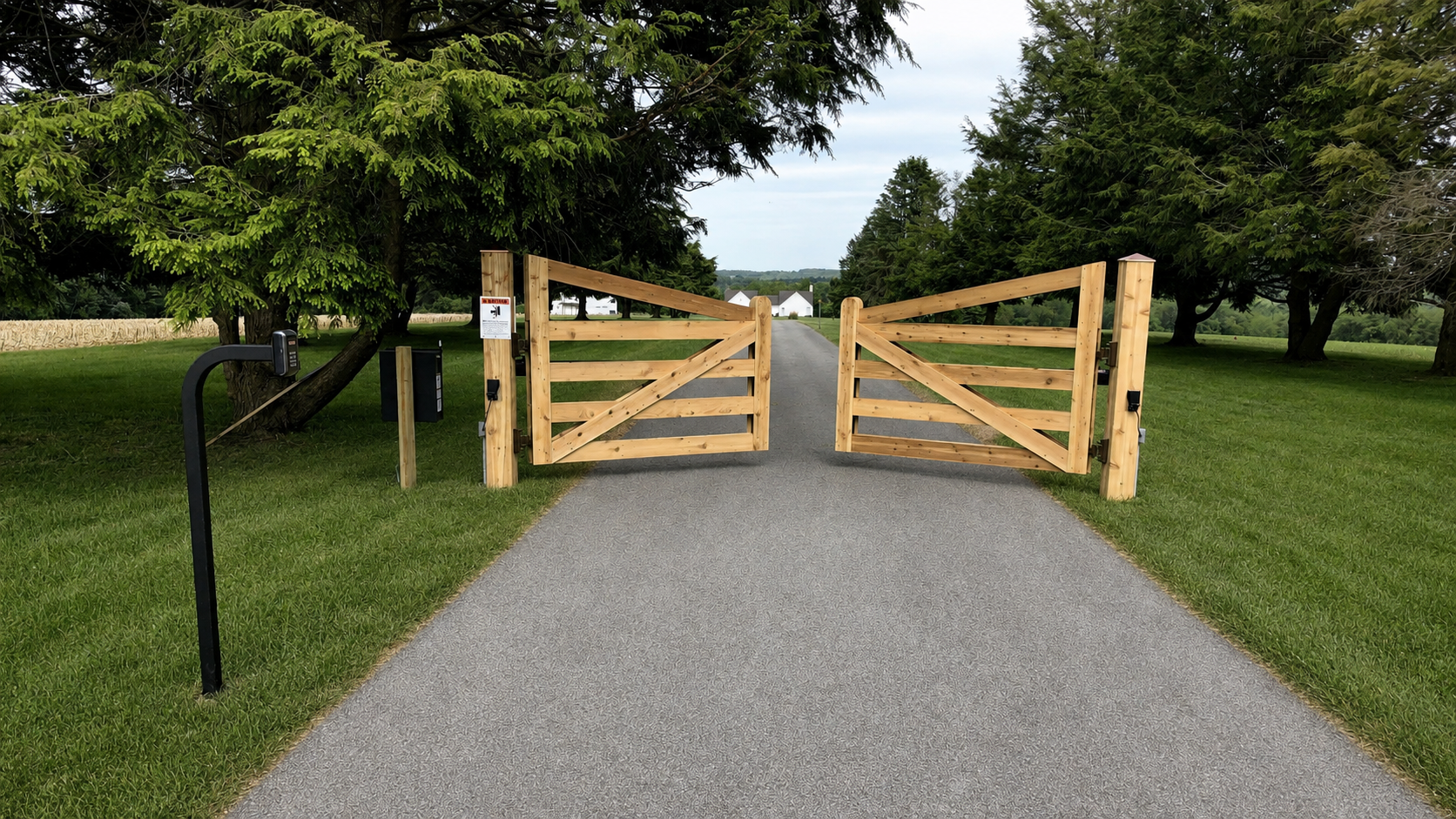
Adding an automated gate to your residential or commercial property may seem like a big undertaking. But with a partner like Integrous Fences and Decks, you can express your vision and let our expert team handle the planning and installation.
From a standard swing gate to a technical vertical pivot gate, we’re here to answer any of your questions about the possibilities and best options for your unique property. Get answers to some common questions below, and don’t hesitate to reach out to our team about your prospective automated gate project.
1. How much time does it take to install an automated gate?
Before Integrous even arrives on site for installation, our team has likely coordinated subcontractors, acquired permits, and sourced materials. This tried-and-true preparation allows our time on your property to go as smoothly and efficiently as possible.
While installation time varies greatly based on your site and choice of gate operator, loops, keypads, and other options, many residential gate installations are completed within a week and many commercial gate installations are completed in one to two weeks.
2. What type of electrical power does an automated gate need?
Most gate operator systems require a dedicated electrical circuit with wiring from a nearby power source. Therefore, be sure to consider trenching and power runs in both your cost and timeline expectations for an automated gate project.
Residential and light commercial gates typically require 120V or 240V power supply, and more robust commercial gate systems will likely need 240V power.
3. Will an automated gate work during a power outage?
Most operator systems include a battery backup that will allow you to continue using the gate during a power outage. Systems also typically include a key-operated release mechanism to manually open or close the gate, if needed.
Automated gates in enclosed properties require a separate pedestrian gate to meet national safety standards like UL 325, and such gates could provide alternate entry and exit in the event of an outage. These gates are not only important for code compliance, but also serve functional purposes like checking the mail and leaving your property on foot.
4. What maintenance is required for an automated gate?
Routinely inspecting your automated gate components helps ensure longevity by promptly attending to issues. Seasonal inspections could include the following:
-Lubricating hinges and rollers
-Tightening loose fasteners
-Testing safety features
-Inspecting electrical elements
-Replacing wireless keypad and entrapment device batteries (typically at a 3-year interval)
Integrous offers property-specific maintenance plans if you’d like assistance taking care of your gate, which you can discuss with your Sales Representative.
5. How long do gate operators last?
The lifespan of your automated gate is directly linked to maintenance and frequency of use. Routine maintenance as described above can help extend the lifetime of your automated gate by years. Additionally, residential gates running only a few cycles a day will typically last longer than commercial gates managing high traffic.
While operator manufacturers typically don’t provide average lifespans, we see our gates functioning well for anywhere from 10 to 20 years.
6. Do I need a permit for an automated gate?
Many townships approach automated gate permits similar to fences, so you may have to align with local requirements for height, opacity, and setbacks. Due to the electrical features, your township may also require an electrical permit for the installation. Our team at Integrous is well-versed in permitting and can help you apply for permits if you decide to have us install the gate.
7. Can existing gates be automated?
Integrating an automated operating system with an existing gate may be possible, but our Sales Representatives will need to inspect the gate to confirm it’s a good candidate. We require our gates to meet ASTM F2200 and UL325 standards, which govern physical design and safety rules. Additionally, the gate frame and posts need to be structurally sound, the hinges and tracks need to function smoothly, and the size and weight need to fit within operator requirements.
Our team is happy to explore the option of automating an existing gate with you, and then we can help you compare that option with the cost of an entirely new gate.
8. How much does an automated gate cost?
The projects we quote typically start around $20,000-$25,000 and go up from there depending on sizing, materials, operating options, and more features.
9. How can visitors enter a property with an automated gate?
Guest entry options largely depend on your entry method. Hosts can provide a temporary code for keypads or a QR code for video systems that expire after one use or after a specific period of time. For intercoms, guests can request entry from the host via a call button or integrated sensors.
Frequent visitors may be given a remote clicker for easy entry. Or, hosts may be able to open the gate through a mobile app or indoor switch after verifying their visitor visually.
10. How can first responders access a property with an automated gate?
Integrous works with your local township to ensure your automated gate aligns with their ordinances for emergency response. To allow first responders to enter your property without force, your automated gate could be equipped with visual strobe sensors, sound-based yelp sensors, key-operated Knox boxes, or codes provided to dispatch.
11. Can an automated gate be insured against liability?
It’s essential to consider not only the aesthetics but also the safety of an automated gate system to protect you or your company from lawsuits. Automated gates can typically be added to standard homeowners or commercial property insurance policies, and they must meet national safety standards such as ASTM F2200 and UL 325 to be eligible. These protocols regulate entrapment protection, opening and closing speeds, pressure settings, safety loops, and more.
Selecting a Certified Automated Gate Systems Designer (CAGSD) and Certified Automated Gate Operator Installer (CAGOI) like Integrous Fences and Decks will ensure the system is compliant with these standards and provide a strong defense should your gate be involved in any injuries or fatalities.