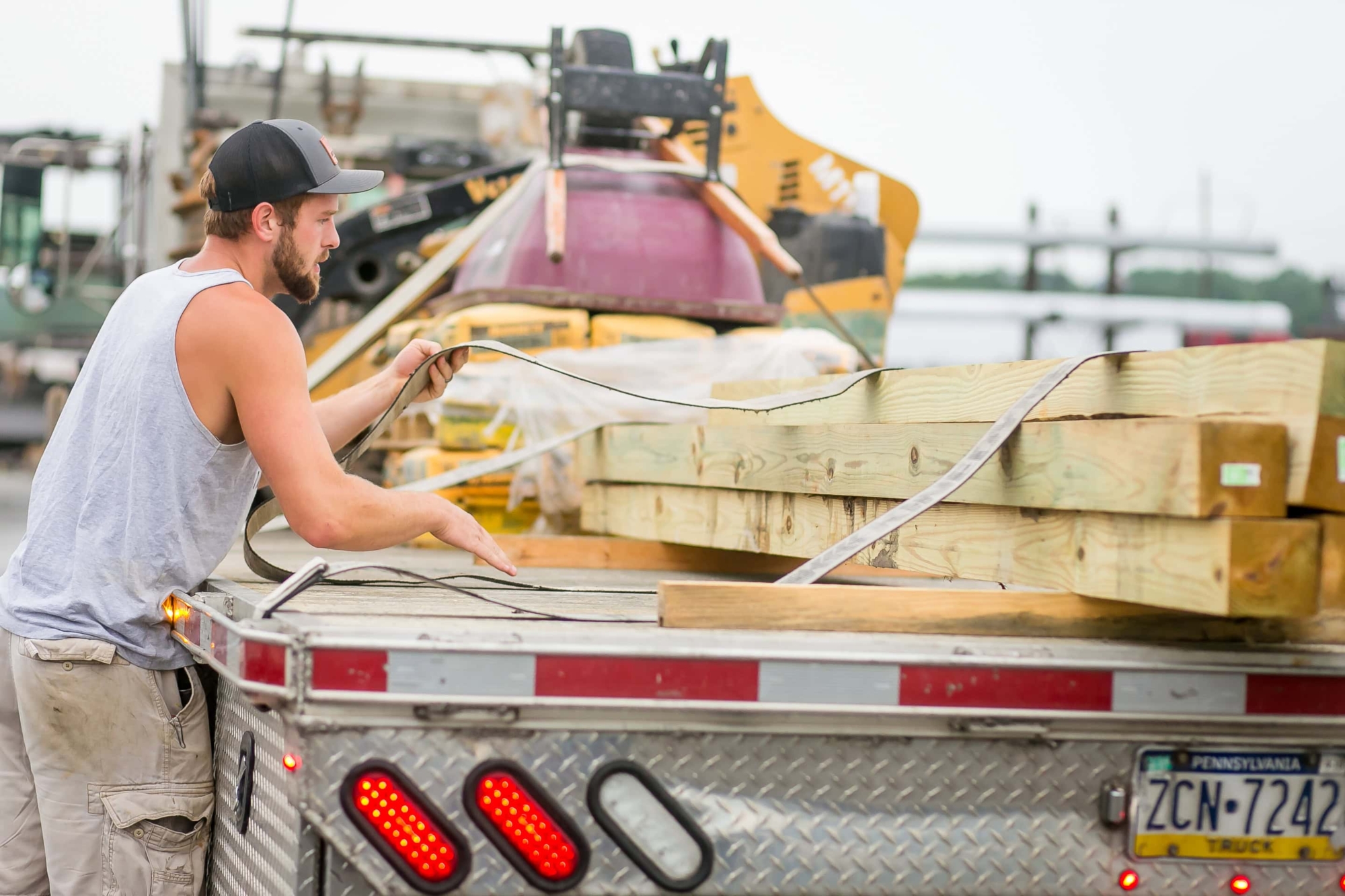
Most fences look impressive on the day installation is complete. But as your fence ages, the quality of materials and intentionality during installation will become increasingly evident over time.
With wood fences, the factors determining longevity can be hidden to the untrained eye. At Integrous, we carefully select lumber of a higher quality than what’s found at typical hardware stores or budget-forward fence companies. The difference between our fences and others’ may not be immediately obvious when comparing proposals, but the selections can make a stark different on how your fence performs and looks as the years go by.
To help you make an informed choice for your property, we’ll break down some key material choices that set our custom wood fences apart—and what to look out for when comparing quotes for your fence project.
Types of Wood Preservatives
One of the most important material choices for a strong wood fence lies below the surface: pressure-treated posts.
Pressure-treated lumber is infused with chemical preservatives to prolong wood lifespans by resisting rot, fungus, and insect damage. The high-pressure process forces these chemicals deep into the lumber, creating stronger protection that a coating applied only to the surface.
Common preservatives used in treated wood include alkaline copper quaternary (AZQ), Alkaline Copper Quaternary (ACQ), chromated copper arsenate (CCA), and micronized copper azole (MCA). Integrous uses MCA-treated lumber, which offers effective protection against decay, environmentally safe ingredients, and a natural look.
The modern copper particle technology in MCA is free of toxic arsenic found in CCA treatments, which has since been phased out of residential and agricultural use. It’s also less corrosive to metal fasteners and hardware, and the treatment’s initial color fades to a warm brown or gray rather than the heavy green tint of other treatments.
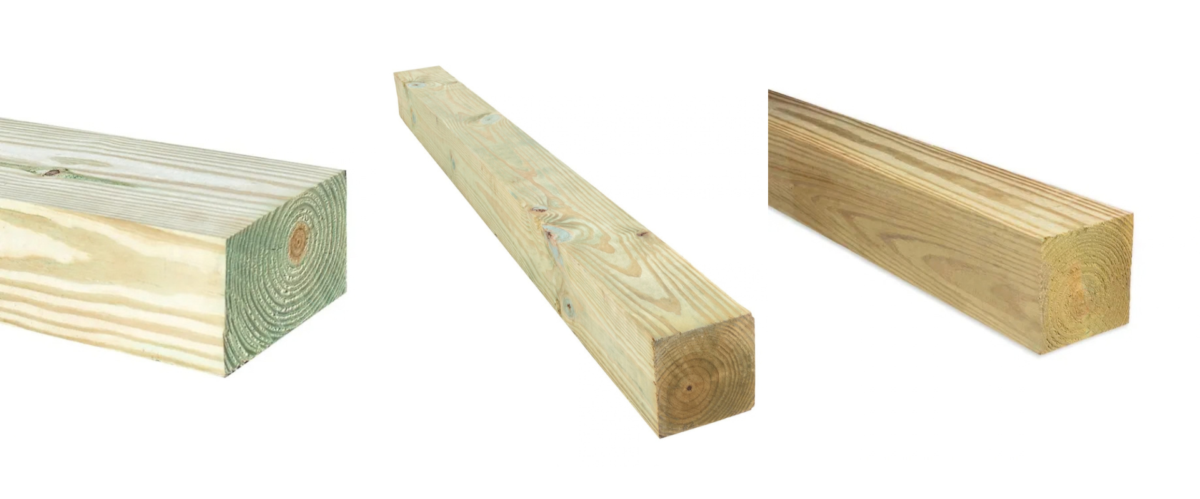
Retention Level of Wood Preservatives
In addition to the type of wood preservative, each pressure-treated post is also rated with an amount of preservative retained in the wood. This retention level is measured in pounds per cubic foot (pcf).
Integrous uses .23 pcf MCA treatment. Since our fence posts are installed approximately 30-36″ below grade, the retention level needs to be higher than above-ground exterior use (which may only be rated .06 or .15 pcf). A .23 MCA treatment is considered appropriate for heavy-duty, structural elements below grade.
Additional Post Protection Options
From the bottom to the top of your fence posts, you can add protections that will help prolong the structural integrity and overall lifespan of your fence. Our fence team often recommends additional post protection options like post wraps, guards, and caps.
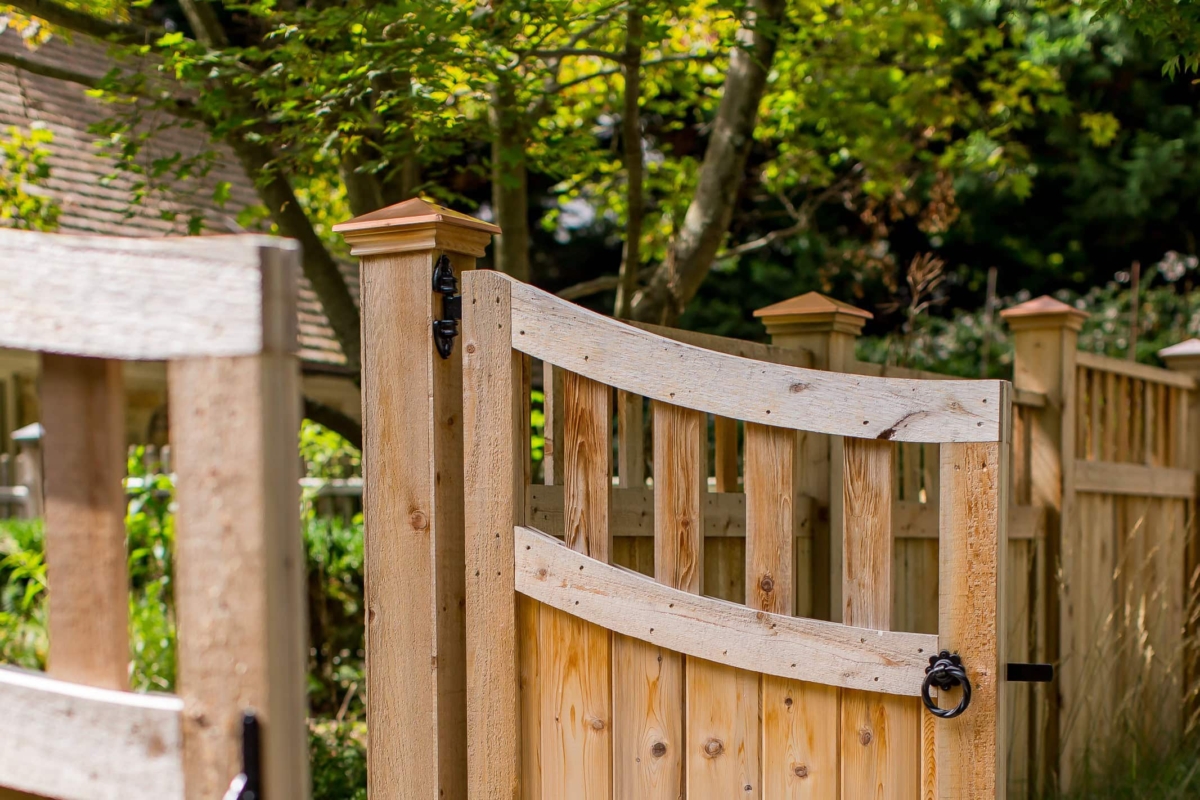
Post wraps are added to the ground-contact portion of fence posts to prevent rot. Post guards protect the face and corners of fence posts from the wear of landscaping and lawn maintenance equipment. Metal or metal-clad post caps reduce water-related decay and prevent squirrels from gnawing on the edges of traditional wood post caps.
You can also stain a pressure-treated fence for an additional layer of protection. While staining will increase costs, it can prolong the life of your wood fence if maintained regularly.
Picket and Rail Thickness
Once you ensure a strong post base for your fence, the above-grade components also play an important role in its overall durability. Noticing differences in the qualities of wood pickets and rails can be tricky, because the nominal size listed on your fence proposal likely doesn’t reveal its actual dimensions.
For instance, your pickets may be listed as 1x4s or 1x6s on your proposal. But pickets in these categories could be as thin as 5/8″, and the thinner pickets are more commonly used since they’re cheaper. At Integrous, we intentionally use thicker 7/8″ pickets to increase strength.
The same is true for wood rails. Many companies use nominal 1×3 rails, which measure approximately 1.25″ x 2.25″ in their finished dimensions. At Integrous, we use nominal 2×4 rails, which measure approximately 1.5″ x 3.5″.
When our craftsmen build your fence in our woodshop, they also remove boards with imperfections to eliminate any weaknesses and ensure the longest life for your high-quality wood fence.
Why Integrous Fences Last Longer
It always brings our team pride and joy when we discover fences we originally installed years ago that are still standing straight and sturdy. The secret to our long-lasting fences lies both in the quality of materials chosen and in the attention given to all details of the fence installation.
That attention to detail shows up in the choices we make throughout the installation—from using screws instead of nails in key areas to setting posts securely in concrete and carefully aligning each section so the top of the fence flows naturally across the property.
If you’re planning a wood fence project, we encourage you to consider the quality of posts, pickets, and rails, the overall construction of the fence, and the reputation of the company before making a decision. These details can drastically impact the lifespan of your fence, and add context when comparing quotes.
Our experienced team members would be happy to quote your project and help you compare our proposal to other proposals you’re considering. Give us a call at 610-430-0743 to start the process today.