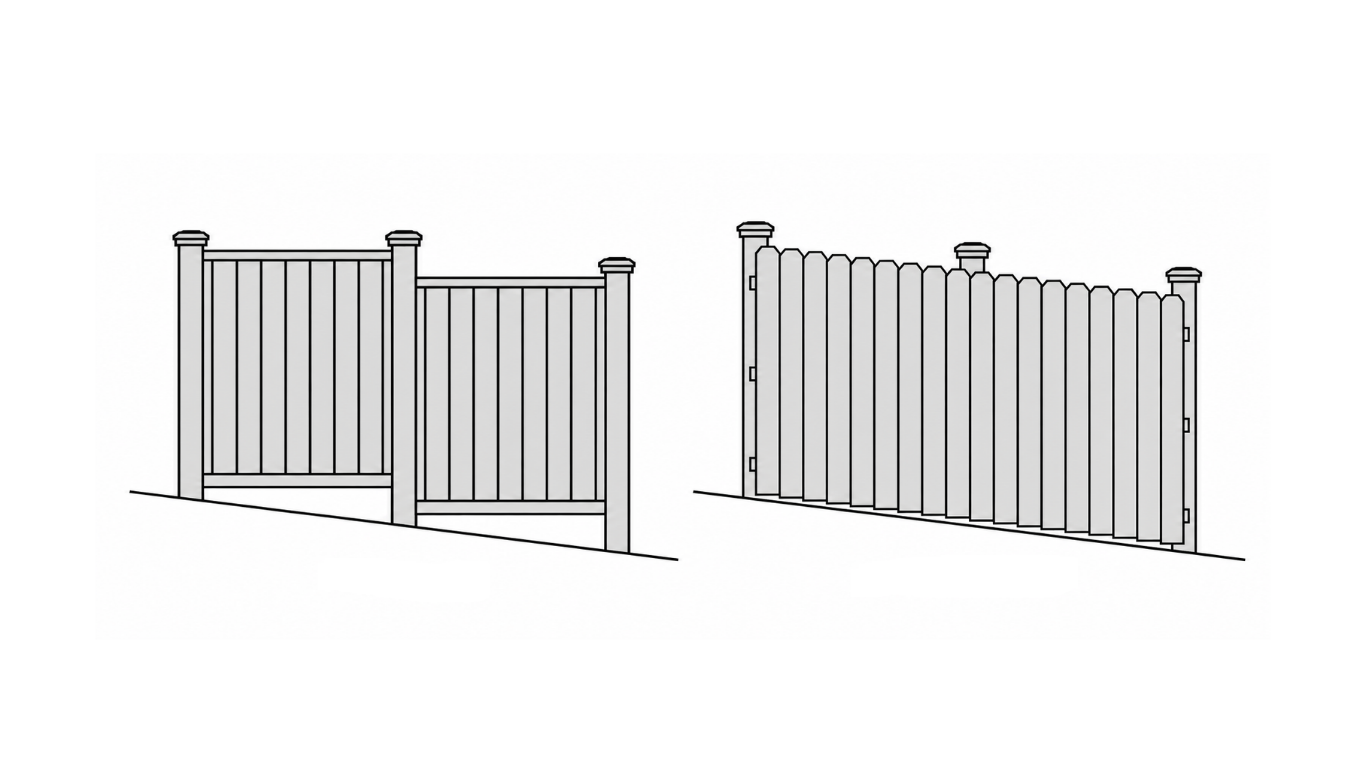
If you’re looking to install a fence on a slope, two words will become very familiar: stepped fences and racked fences.
Fences installed on non-level ground are typically built with one of these methods, and the best fit for your property will be a dance between the severity of the elevation drop, your preferred fence style and material, and your inclination toward the stepped or racked look. It’s important to learn how these factors impact each other upfront so you can envision what’s possible and shift your fence plans, if need be.
With this framework in mind, see photo examples of each method and get tips to make the best decision for your fence install below.
Stepped Fences
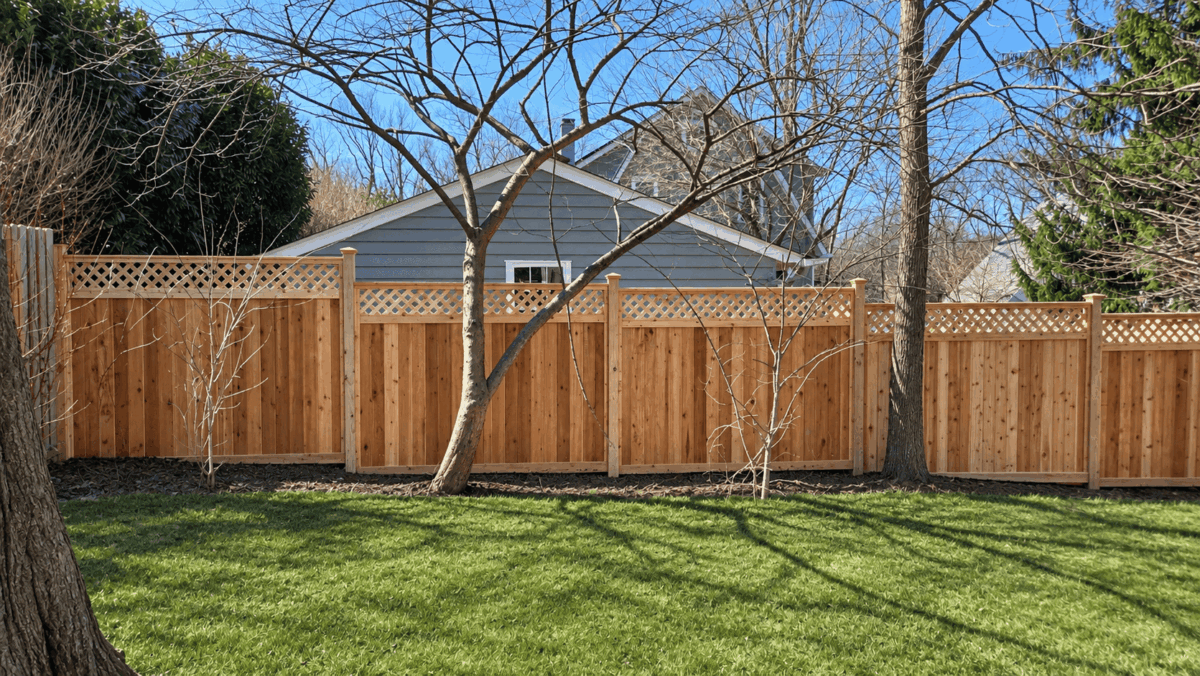

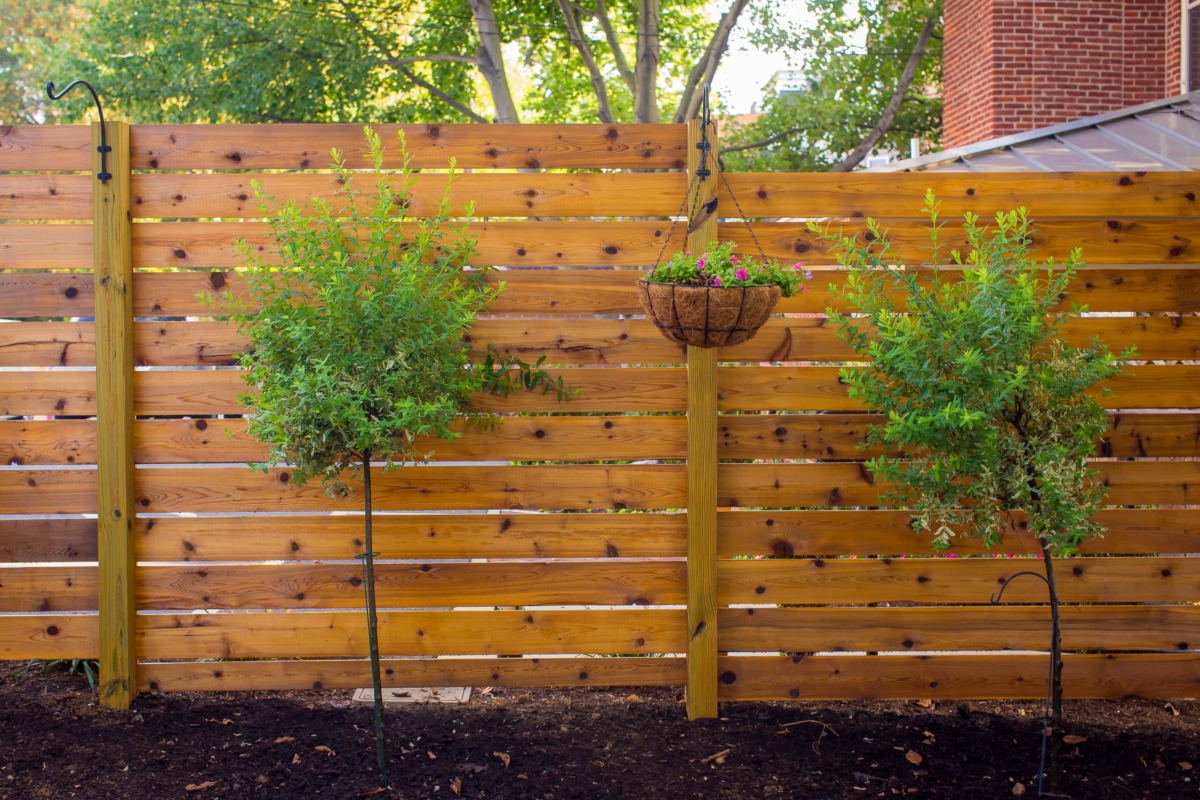


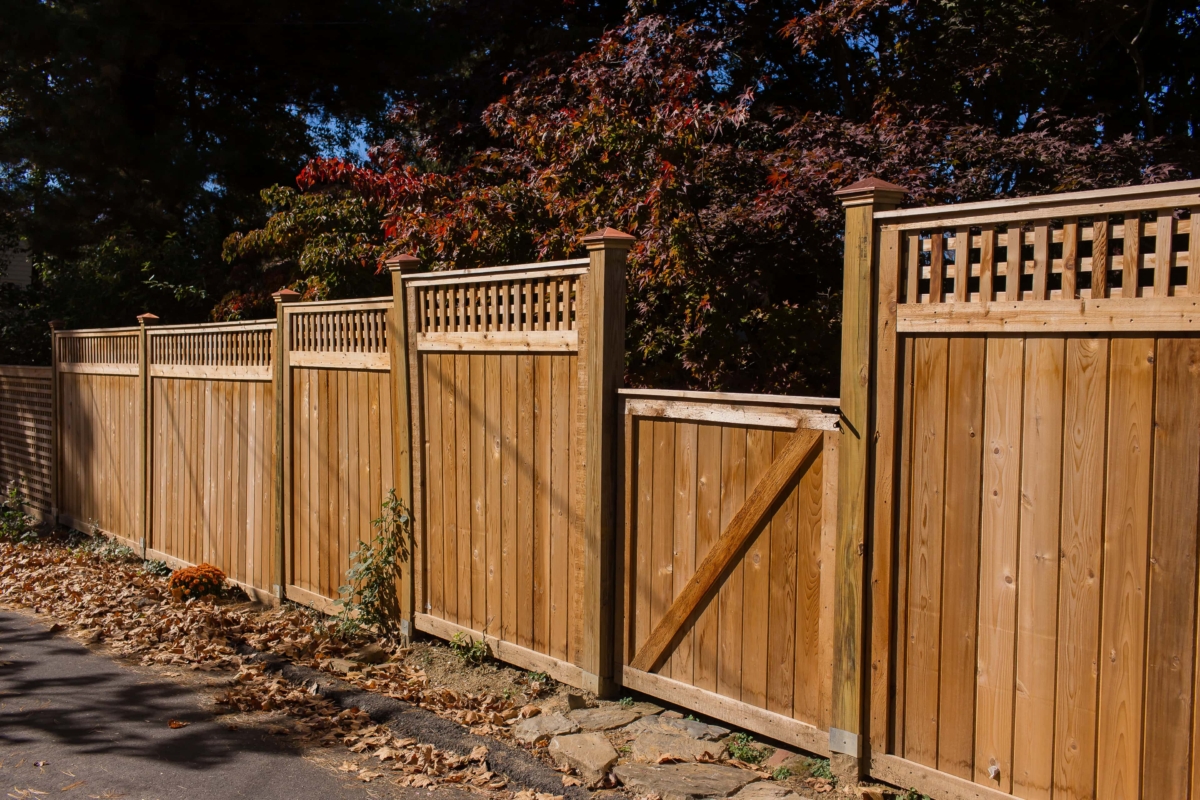
Stepped fences use full, level sections that step up or down with the grade. The result is an intentional, stair-step look that homeowners are drawn to for its clean, straight appearance.
Stepping your fence will create a triangular-shaped gap between the bottom rail and the ground, which becomes more noticeable with larger elevation changes. If the purpose of your fence is to create a barrier, you may want to add an infill or landscaping to prevent pets, wildlife, or small children from getting through. Your Integrous Sales Representative can help you explore solutions that will be both functionally and aesthetically pleasing.
Virtually all common fence materials can be installed using the stepped method, but not all fence styles can be racked, such as our Westminster, Buckingham, Ashbridge, and Chiswick red cedar privacy and semi-privacy fence styles. Explore these fences on our Wood Fence Styles page.
Racked Fences
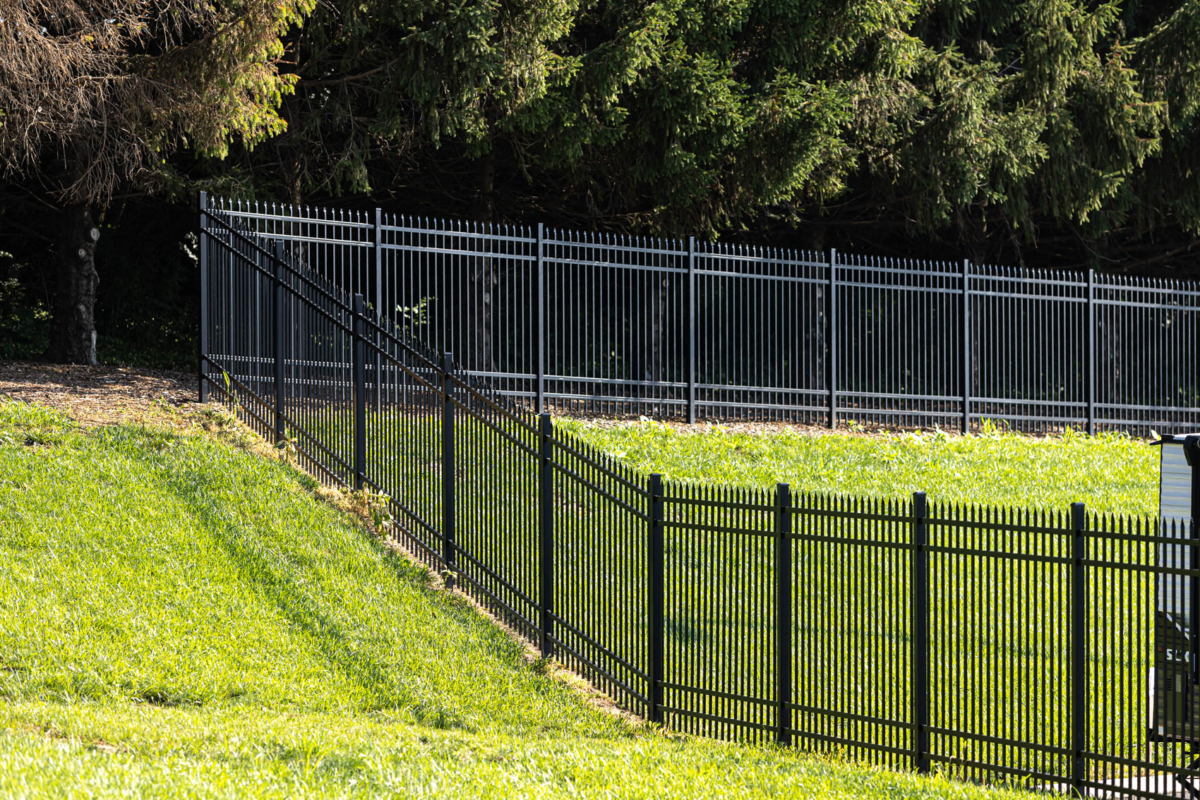

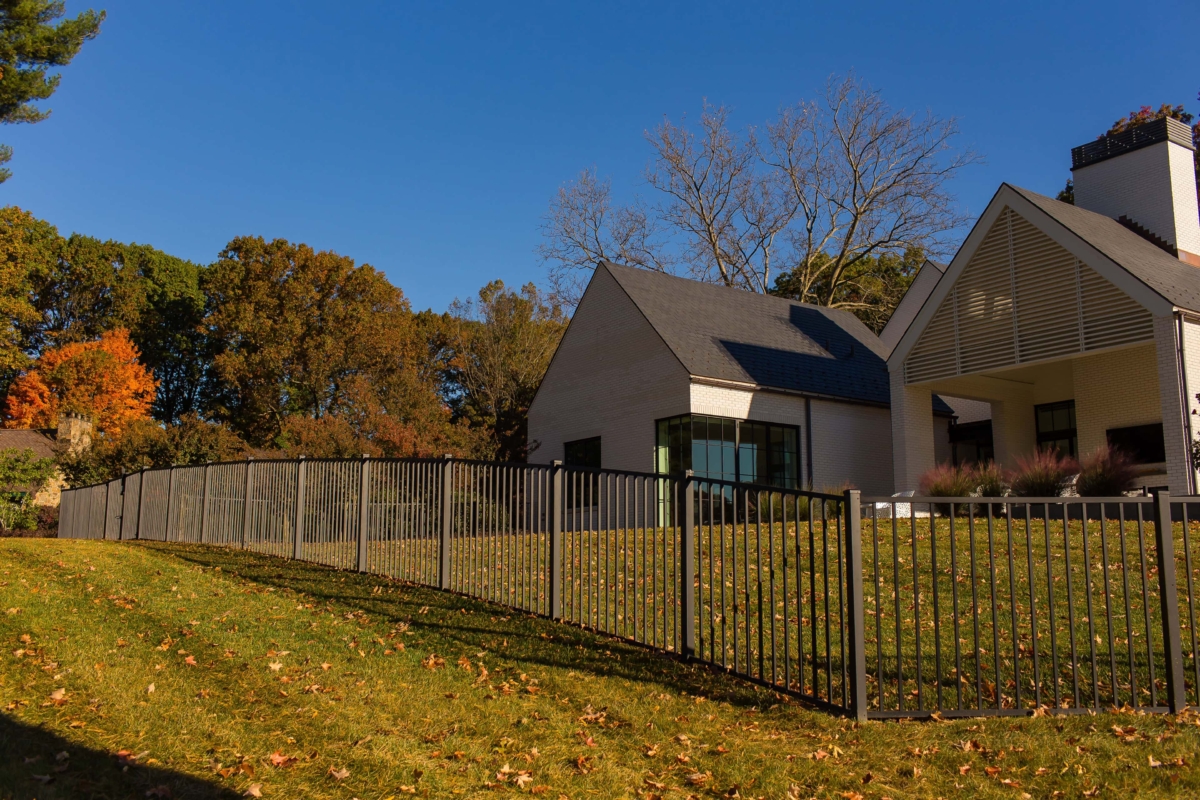
Racked fencing continuously follows the slope of the ground, with the horizontal rails matching the angle of the grade while the posts and pickets remain perfectly vertical.
Well-designed racked fences will look cohesive and smooth, with the horizontal rails making soft transitions and the gap between the bottom rail and the ground staying consistent.
Racking a fence on a gradual slope will hardly be noticeable. For steeper slopes, the specific material and fence style will determine the allowable elevation change, which is typically measured in inches over a typical 6′ or 8′ wide fence section span.
Many of our standard wood fences can be racked on gradually sloped grade, including Lancaster, Kensington, Brentwood, York, Brixton, King’s Cross, Liverpool, Blackburn, White Chapel, Manchester, Wimbledon, and Chatham.
Planning Your Sloped Fence Project
Specifically for fence projects involving sloped grade, it’s important for your contractor to visit the site before providing a fence quote so they can see the grade and provide recommendations. Due to the expertise required to install a fence on a slope, both stepping and racking will reveal the skill and craftsmanship of your fence contractor, so choose wisely.
At Integrous, we like to meet with homeowners on-site to take measurements and discuss how we can combine your dreams with what’s possible. We can highly customize our wood fences, which are made to order at our in-house woodshop, to ensure the final product is specifically designed for your slope and your needs.
Schedule a free, on-site appointment with an Integrous Sales Representative today.


